What Happens to Idle Land in Central Ohio
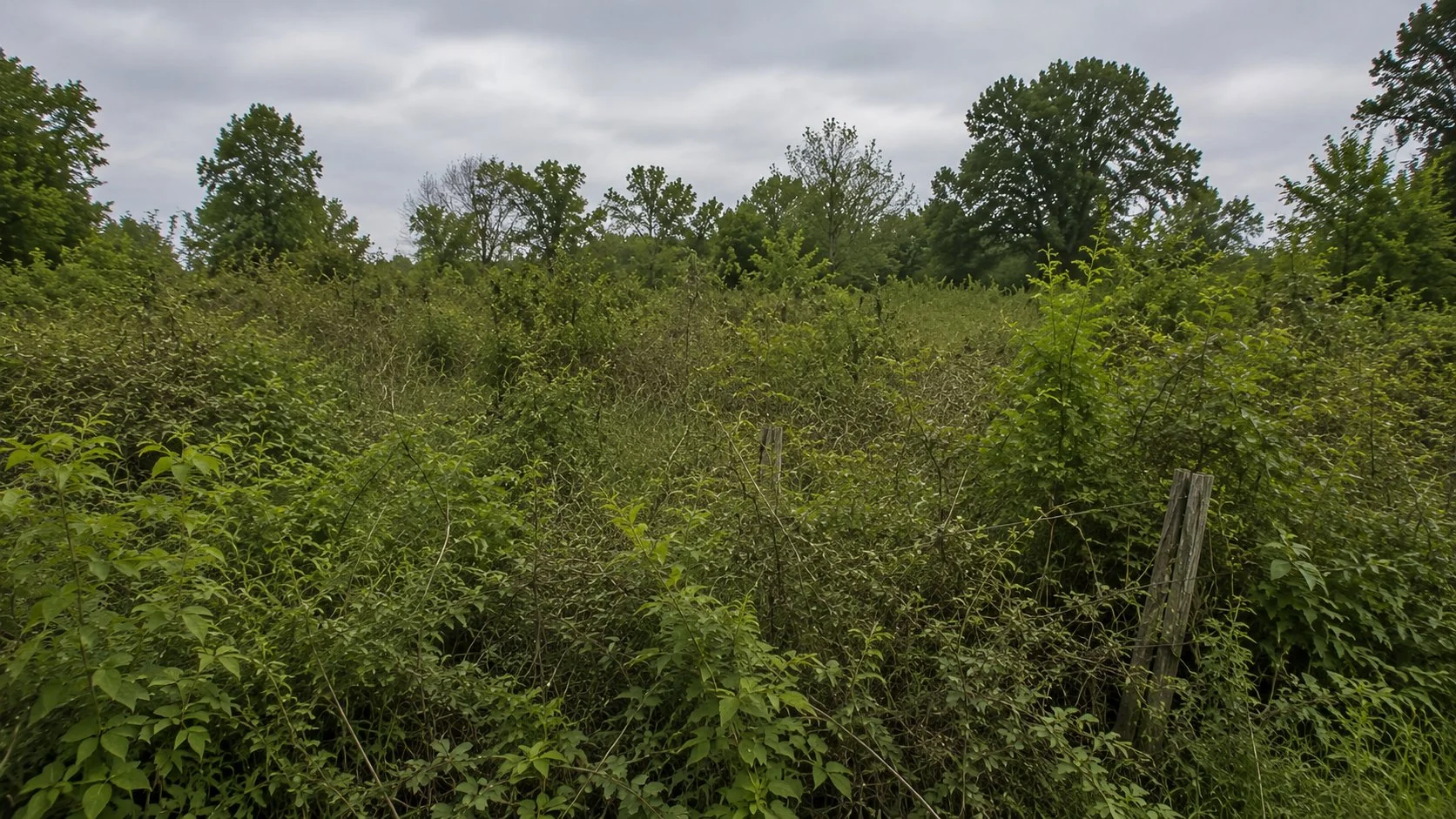
Agricultural land that stops being actively managed doesn't stay open for long in this part of Ohio. Warm-season grasses give way to goldenrod and wild aster in a year or two. Multiflora rose and bush honeysuckle move in from the fence rows. Young cottonwoods, box elders, and willows sprout wherever moisture collects. In ten years, what was once a productive pasture or hay field is a dense thicket that's nearly impassable on foot.
We see this frequently across all four counties we serve — land that was farmed by a previous generation and has been idle since, land that an owner bought with the intention of using but let go for a few years, and land that simply got away from someone when circumstances changed. Reclaiming it is a straightforward job for tracked forestry mulching equipment.
How Pasture Reclamation Works
The tracked mulcher processes everything — brush, woody shrubs, small trees, invasive species — down to ground level in a single pass. The mulch layer left behind breaks down over one to two growing seasons and improves the soil rather than leaving it bare and erosion-prone the way dozer clearing does.
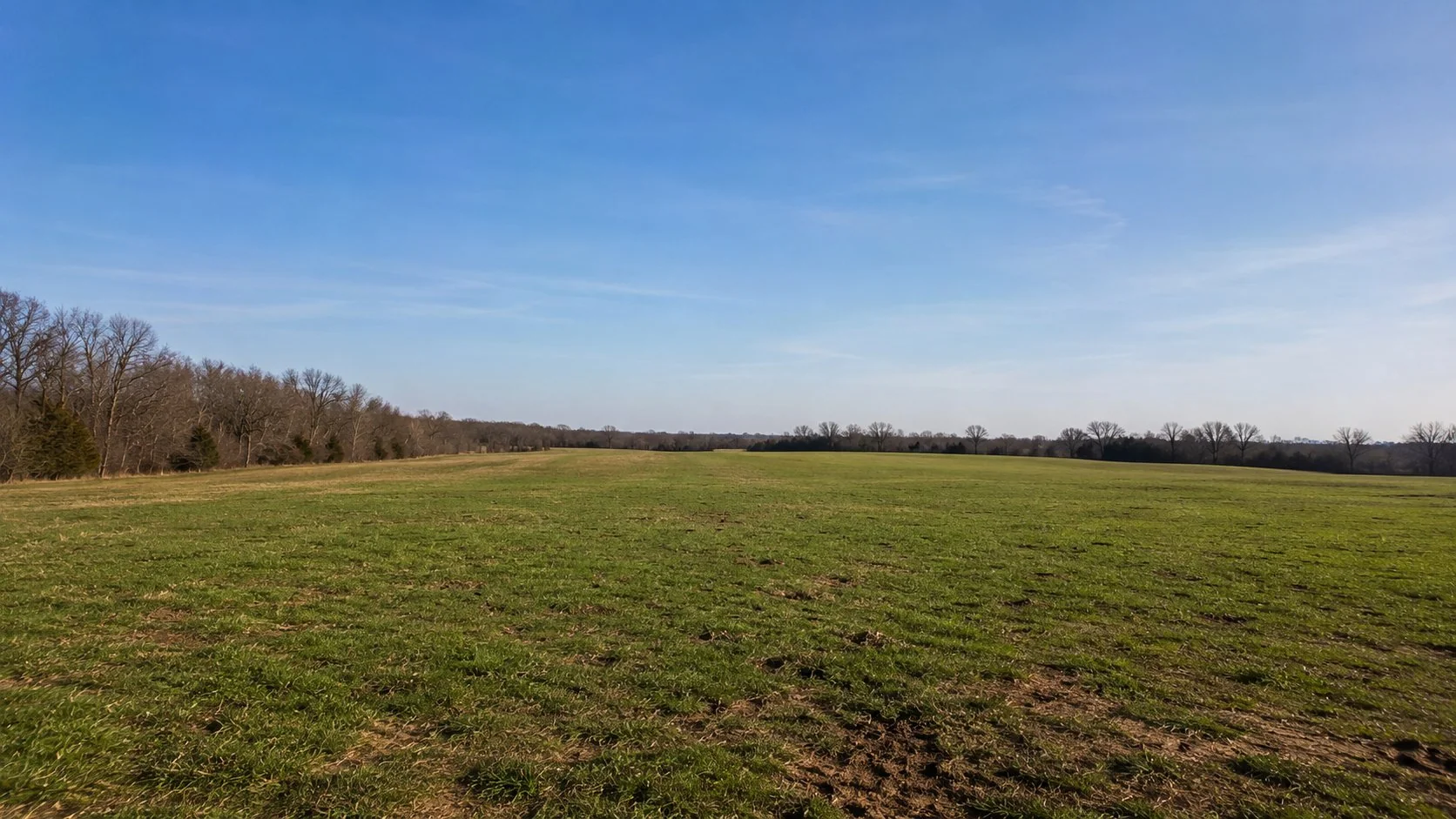
After clearing, the land is ready for overseeding with a pasture grass mix appropriate for Ohio's climate — fescue, orchardgrass, or a custom blend depending on intended use. Most reclaimed pastures are establishing new grass within one growing season after clearing.
For land going back into livestock use, we work with the owner to understand fencing needs, water access, and any areas to leave as woodlot or windbreak. Pasture reclamation is often combined with fence line clearing to bring the whole property back into functional condition at once.
Not sure when to start? Our guide on the best time to clear land in Ohio covers seasonal timing.
"We reclaimed a 12-acre pasture outside Dresden in Muskingum County a couple of years back. The family had farmed it for livestock until the early 2000s when the herd was sold off. By the time we got there, the whole thing was chest-high multiflora rose and scattered cottonwoods, with a few mature oaks we left standing. It took two days with the machine. The following spring the owner had it overseeded and had cattle back on it by fall. That's what this work is about."
Frequently Asked Questions
How much does pasture reclamation cost?
$1,500 to $4,500 per acre depending on vegetation density. Light brush reclaims faster and cheaper than dense stands of mature honeysuckle or multiflora rose. We quote after walking the property and give you a flat-rate or per-acre number.
What's the best time of year for pasture reclamation?
We work year-round. Late fall through early spring is ideal — the ground is firmer, there's no standing crop to worry about, and you can see the full extent of woody growth without leaf cover. Spring clearing gives the best head start for summer seeding.
Will the invasives come back?
Some regrowth is normal, especially from honeysuckle and multiflora rose roots. Follow-up spot herbicide treatment on resprouts the first spring after clearing, combined with establishing competitive pasture grass, gives the best long-term result. Healthy dense grass is the best suppression for invasive regrowth.
Can you reclaim land near a pond or wetland?
We can work in the upland areas around water features. Work directly adjacent to or within a wetland or stream buffer may require permits. We'll flag that at the estimate if it applies to your property.