What Is Forestry Mulching?
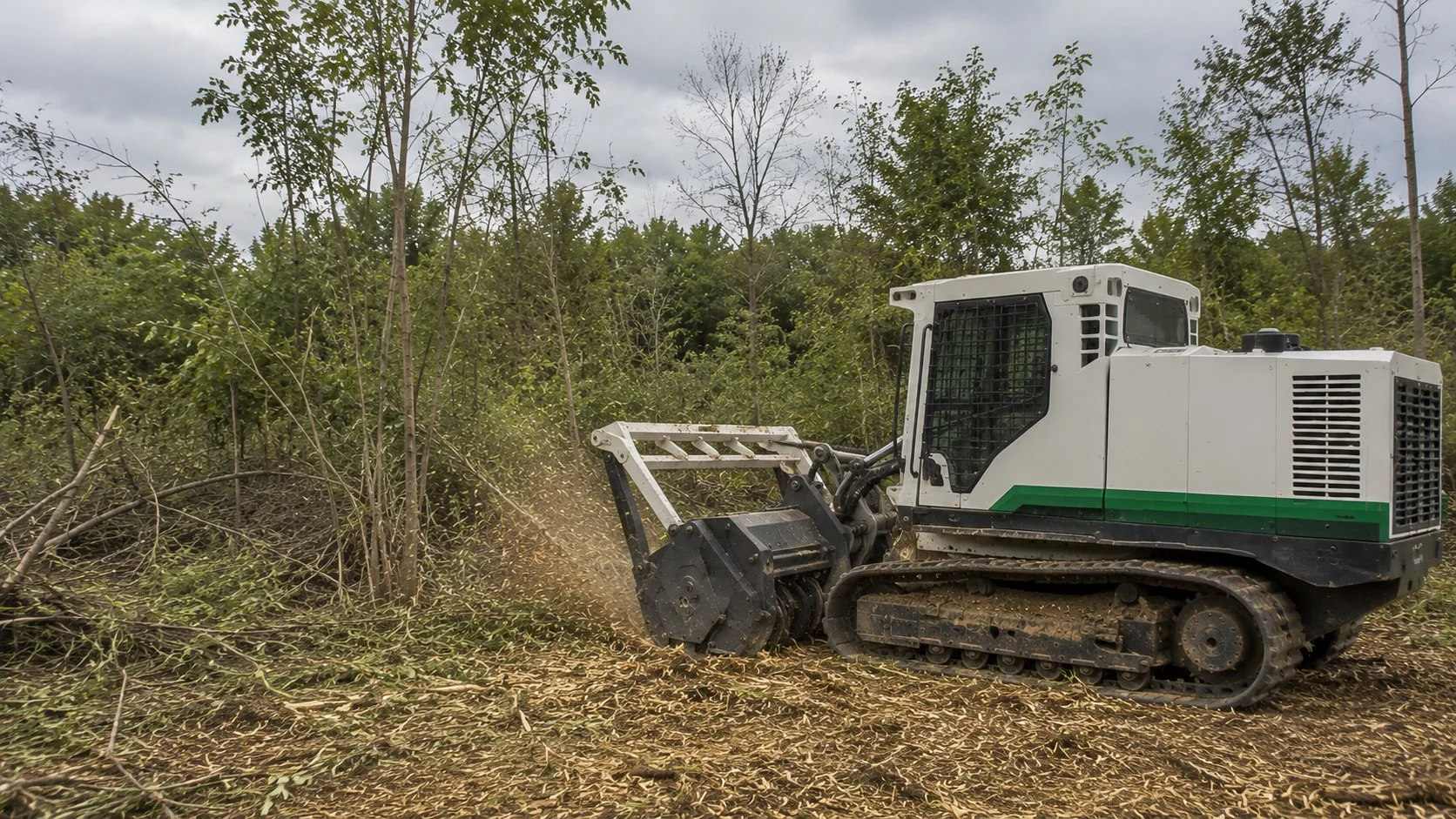
Forestry mulching is a single-machine land clearing method where a tracked unit with a high-speed rotating cutting head grinds trees, shrubs, brush, and invasive vegetation directly into mulch — right where it stands. Unlike bulldozing or hand clearing, nothing gets pushed into piles, nothing gets hauled off, and the soil stays where it belongs.
The cutting head runs at high RPM with carbide teeth that shred material up to about 8 inches in diameter in a single pass. What's left is a layer of wood chip mulch that breaks down over 12 to 18 months, returning organic matter to the soil and suppressing future weed growth in the process.
For most properties in Central Ohio — overgrown lots, brushy pastures, fence lines choked with honeysuckle, woodland understories full of invasive shrubs — forestry mulching is faster, cleaner, and more cost-effective than any alternative.
Timing matters too — see our guide on the best time of year to clear land in Ohio.
Why It Works Better for Ohio Properties
Central Ohio soil is clay-heavy, particularly in Licking and Fairfield counties. When a bulldozer works wet ground — which in Ohio means most of March, April, and November — it compacts and displaces the topsoil layer that took decades to develop. You end up with bare subsoil that grows nothing and erodes every time it rains.
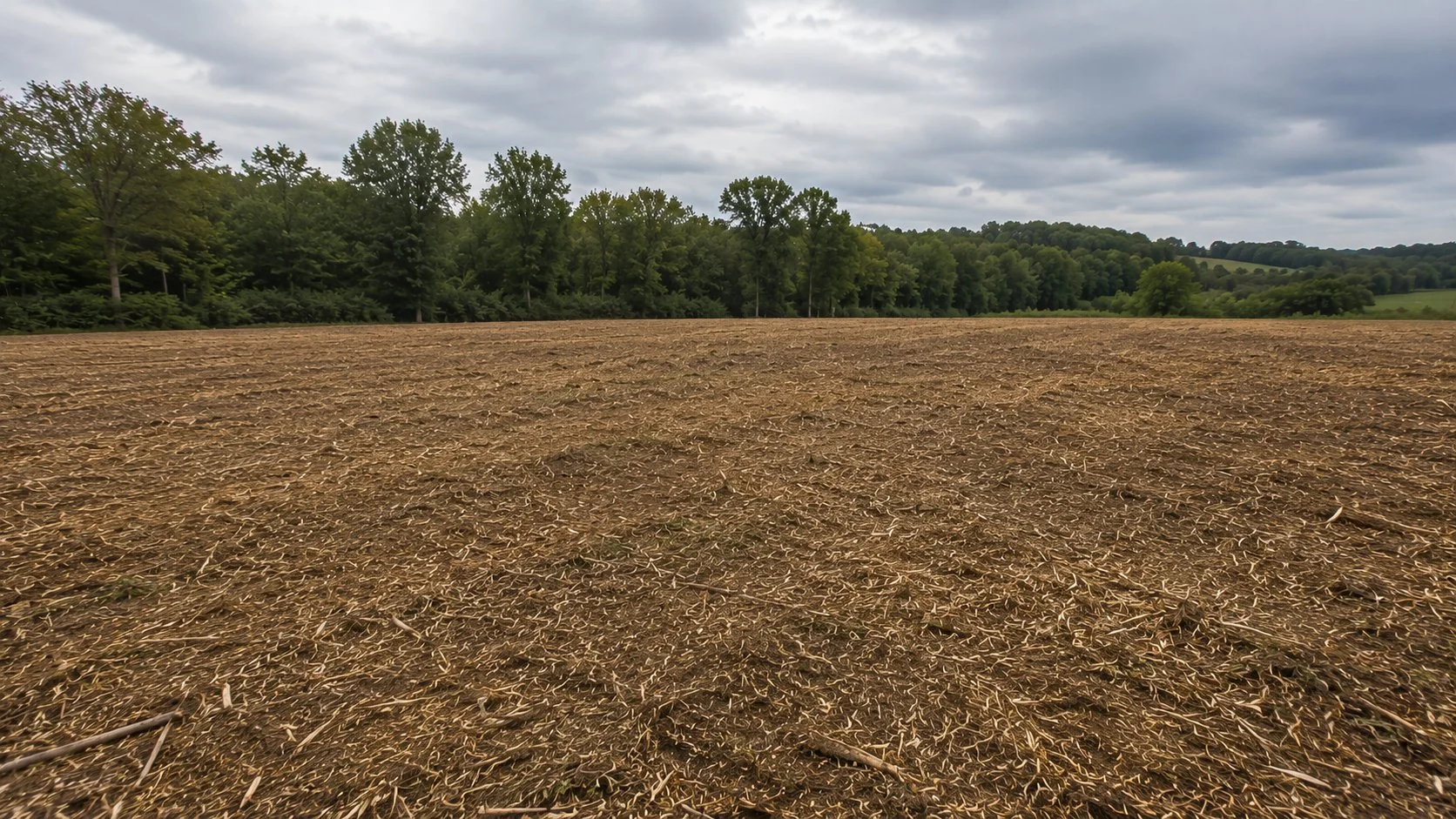
Forestry mulching doesn't do that. The tracked machine distributes its weight across a wide footprint and never digs into the ground. The mulch layer it leaves behind actually improves soil structure over time — better drainage, better microbial activity, better conditions for whatever you plant next.
In Muskingum and Knox counties, where the terrain gets hillier, this matters even more. Dozer work on a slope leaves a mess. Mulching handles grade changes without the erosion risk.
"We cleared a hillside lot outside Mount Vernon last fall — about 3 acres, steep grade, dense mix of honeysuckle and young box elders. The owner had gotten a dozer quote and was told it would need to be done in dry conditions only, probably summer. We did it with the mulcher in October, no issues with the grade, no soil disturbance. He had it seeded before the first frost."
What Forestry Mulching Can Handle
- Trees up to 8 inches diameter at the base
- Dense stands of invasive bush honeysuckle, multiflora rose, and autumn olive
- Pioneer species — cottonwood, box elder, ailanthus — that colonize idle fields
- Overgrown fence lines and property boundaries
- Brushy woodland understories
- Scrubby pasture land taken over by woody growth
- Residential lots with mixed tree and brush cover
- Commercial development sites with light to moderate tree cover
Forestry Mulching vs. Bulldozing
The most common question we get is whether to mulch or doze. The honest answer is it depends on what you're doing with the property afterward — but for most jobs we see in this region, mulching wins.
Bulldozing is faster on very large trees. If you have a lot of 18-inch oaks that need to come down, a dozer handles that better. But a dozer leaves you with debris piles that have to be burned or hauled, stumps that need grinding, and disturbed soil that needs to be regraded and reseeded before it's usable. Those secondary costs add up quickly.
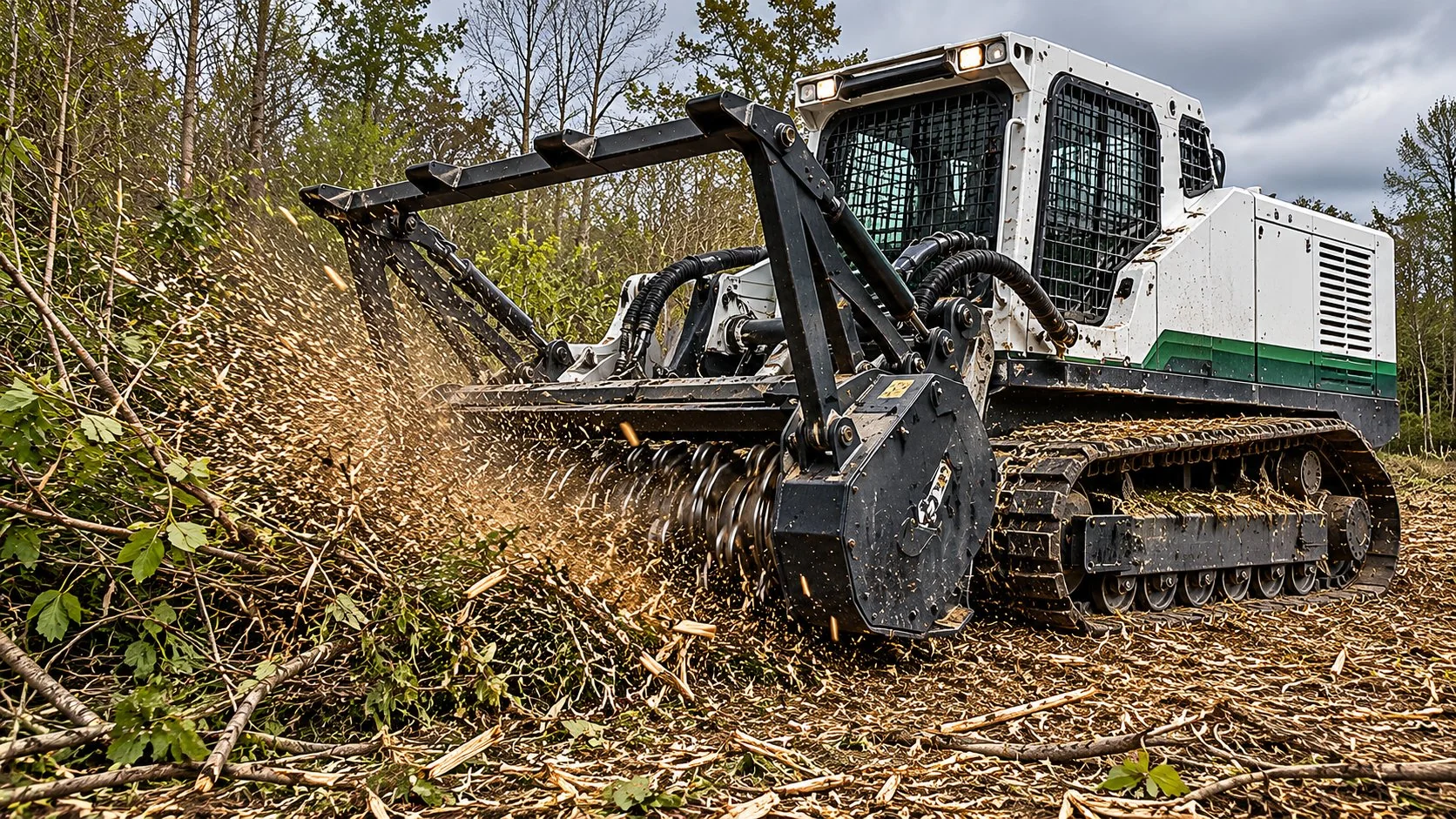
Forestry mulching handles everything in one pass. The mulch layer is the finish product — you don't need a second machine or a second visit. For residential lots, pasture reclamation, invasive species removal, and fence line clearing, it's almost always the right call.
Full Comparison: Mulching vs. Bulldozing →Typical Pricing — Central Ohio
Frequently Asked Questions
How much does forestry mulching cost per acre in Ohio?
$1,500 to $5,000 per acre depending on vegetation density. Light brush is on the low end. Dense invasive stands like solid honeysuckle are on the high end. We quote after walking the property — satellite estimates aren't accurate enough to be fair to either of us.
What size trees can you mulch?
Up to about 8 inches diameter at the base. Most residential and agricultural clearing in Central Ohio falls well within that range. For larger trees, we can coordinate felling before the mulching pass.
Does mulching kill honeysuckle permanently?
It removes it effectively and at scale, which is the hard part. But bush honeysuckle will resprout from roots. Follow-up spot treatment of new growth — typically one or two herbicide applications — is needed for full eradication. We can walk you through what that looks like.
How long does a typical job take?
A 2 to 5 acre residential lot typically takes one to three days. Larger properties take longer proportionally. Dense vegetation takes more time per acre than light brush. We give you a realistic timeline at the estimate.