Invasive Species Are a Real Problem in Central Ohio
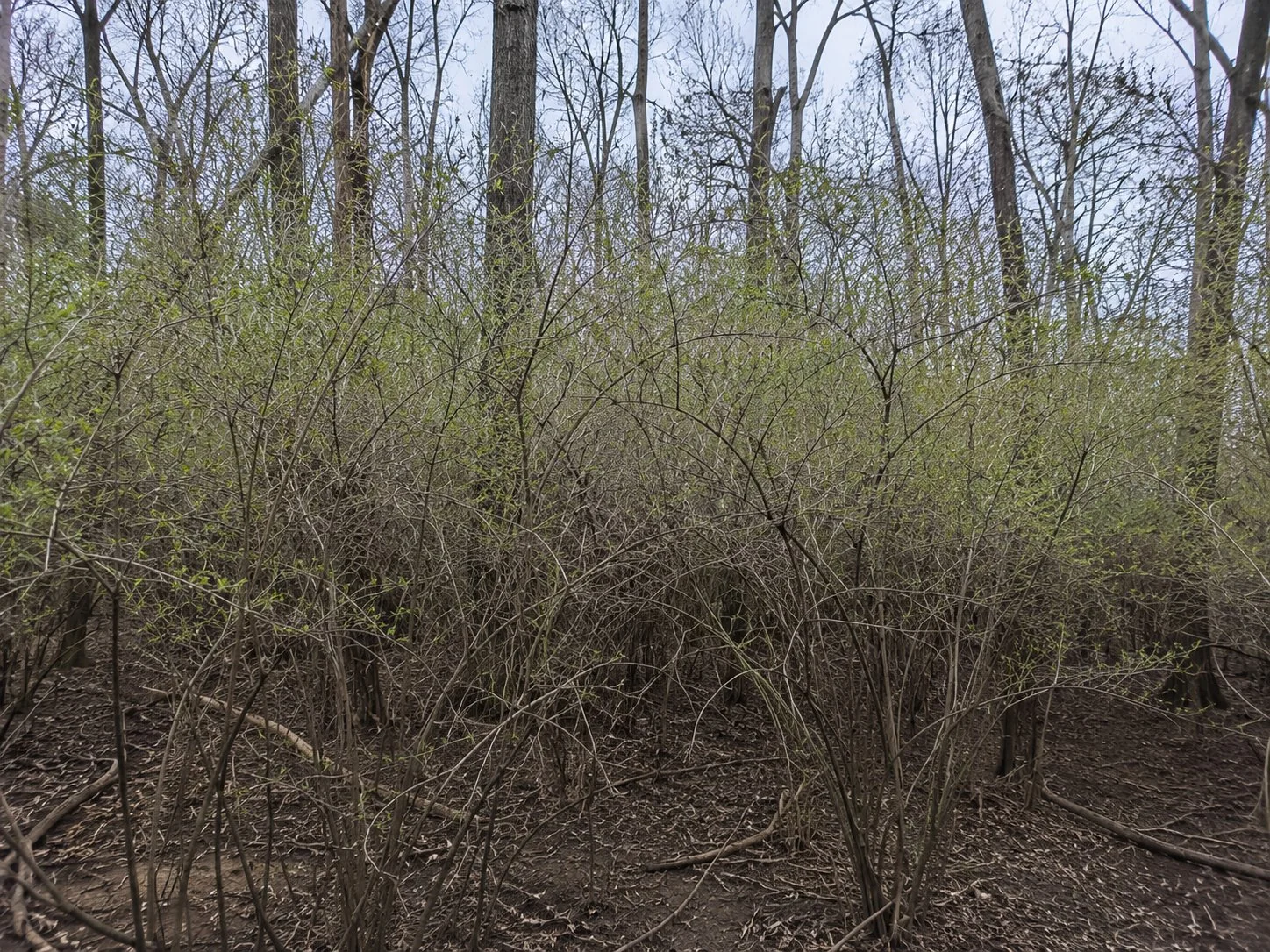
If you've walked a woodlot in Licking, Knox, Muskingum, or Fairfield County in the last ten years, you've seen it. The understory choked with bush honeysuckle so thick you can't see twenty feet into the trees. Multiflora rose turning a fence row into an impassable wall. Autumn olive taking over an old field. Ailanthus sprouting from every disturbed area along a road cut.
These species don't thin out on their own. They crowd out native vegetation, reduce wildlife habitat, and spread aggressively. Once they're established, hand removal is impractical at scale. Forestry mulching is one of the most effective tools available for large-scale invasive removal — and for most properties in this region, it's the only realistic option for clearing more than an acre or two.
Species We Commonly Remove in This Region
- Bush Honeysuckle (Lonicera maackii) — The most widespread invasive in Central Ohio woodlots. Leafs out early and holds leaves late, shading out native understory plants. Forms impenetrable thickets.
- Multiflora Rose (Rosa multiflora) — Dense thorny shrub that takes over fence rows, field edges, and open woodland. Spreads prolifically by bird dispersal.
- Autumn Olive (Elaeagnus umbellata) — Fast-growing shrub that colonizes old fields and disturbed areas. Fixes nitrogen, which actually helps it outcompete native species.
- Ailanthus / Tree of Heaven (Ailanthus altissima) — Rapid-growing tree that sprouts aggressively from roots after cutting. Common along roadsides and disturbed areas in all four counties.
- Callery / Bradford Pear (Pyrus calleryana) — Escaping cultivation across Ohio, colonizing fence rows and field edges. Dense, thorny when naturalized.
How Forestry Mulching Addresses Invasive Species
The mulcher removes invasive species at ground level and processes the above-ground material into mulch in a single pass. For dense stands covering multiple acres, this is the only efficient method. What would take a crew weeks with hand tools, the machine handles in a day or two.
The honest caveat: forestry mulching is highly effective for removal, but most invasive species will resprout from roots. Bush honeysuckle in particular is persistent — it will send up new growth the following spring. The industry-standard approach is to mulch the main stand, then follow up with targeted herbicide treatment on resprouts the next growing season. That combination is the most cost-effective path to long-term control.
"We did a 4-acre woodland job in Granville where the entire understory was solid honeysuckle — you literally could not walk through it. The property owner had tried hiring a crew with hand tools the year before and they cleared maybe a quarter acre in a week. We had the whole thing done in two days with the mulcher. He came back the following spring for a follow-up herbicide treatment on the resprouts. Two seasons later the native understory was coming back on its own."
Frequently Asked Questions
Will invasive species come back after mulching?
Most will resprout from roots, especially bush honeysuckle and ailanthus. The mulching removes the above-ground mass effectively. Follow-up herbicide treatment on resprouts — usually one or two applications — is needed for lasting control. We can connect you with resources for that follow-up step.
What's the best time of year for invasive removal?
Forestry mulching can be done year-round. For combined mulching and herbicide programs, late summer through fall is effective because invasives are translocating nutrients to roots, making herbicide more effective. Winter mulching is also productive — no leaves makes visibility and access easier.
Can you clear honeysuckle in a woodlot without damaging native trees?
Yes — the operator controls what gets mulched. Native canopy trees, desirable shrubs, and any vegetation you want to keep can be worked around. We're selective where selectivity is needed.
How much does invasive species removal cost?
Dense invasive stands typically run $2,500 to $5,000 per acre depending on thickness and species. We provide a written quote after walking the property.