Why Invasive Species Are a Land Management Priority in Central Ohio
Central Ohio has a serious invasive species problem. Drive through any woodlot in Licking County in November and you'll see it — the understory glowing green with bush honeysuckle long after the native species have lost their leaves. Walk a fence row in Knox County and try to get through the multiflora rose. Look at an old field in Fairfield County and count the autumn olive.
These plants didn't arrive here by accident. Many were intentionally introduced — honeysuckle as wildlife habitat plantings, multiflora rose as living fences, autumn olive for erosion control — before their invasive potential was understood. They're now established across millions of acres of Ohio woodland and agricultural land, and they don't go away without active management.
This guide covers the species we most commonly encounter on properties across our four-county service area. It's a practical identification and management reference, not a comprehensive ecological treatise.
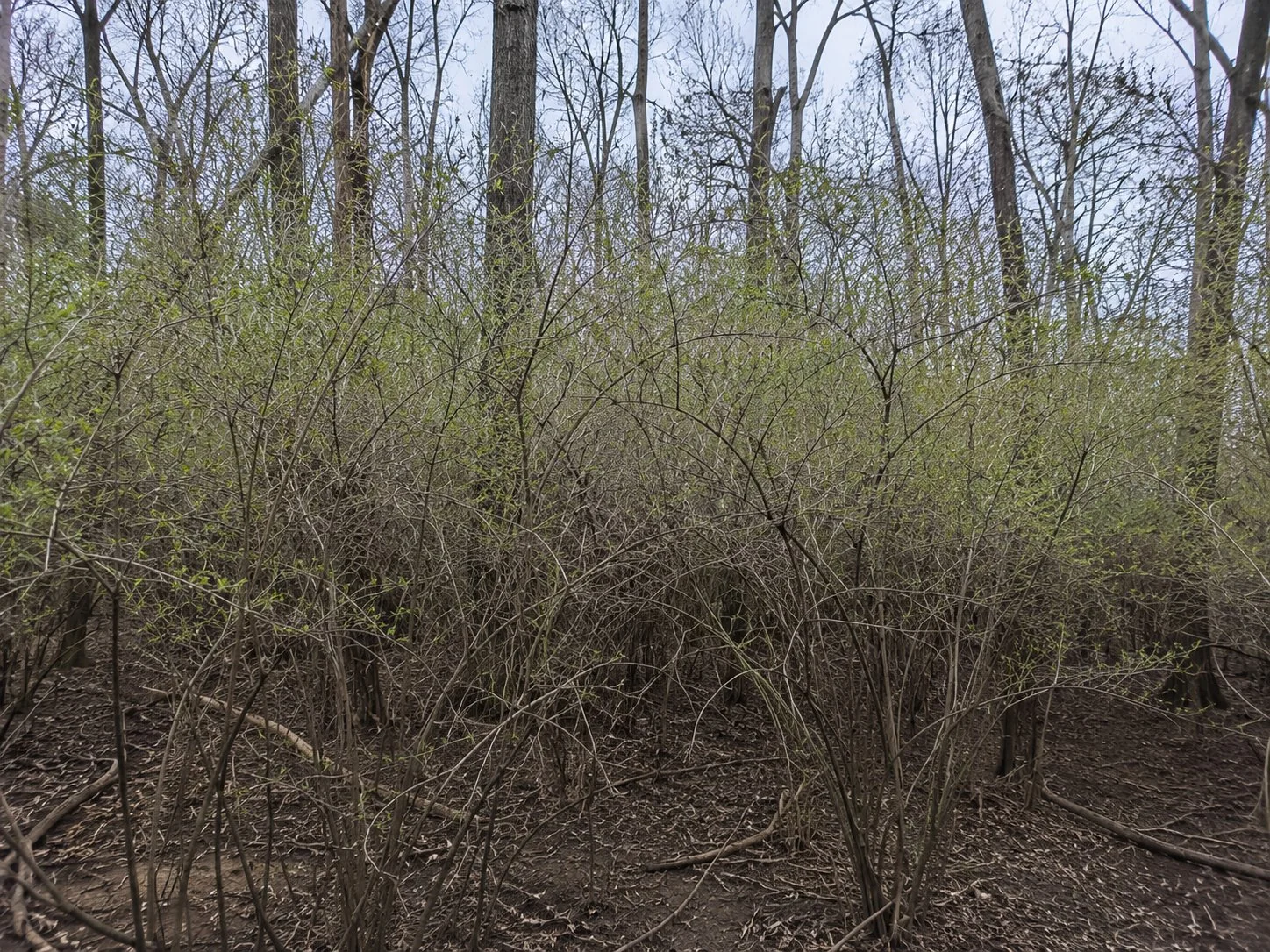
Bush Honeysuckle (Lonicera maackii, L. tatarica, L. morrowii)
What it looks like: A large, multi-stemmed deciduous shrub reaching 6 to 15 feet tall. Oval opposite leaves. Small white or pink tubular flowers in May–June. Red or orange berries in fall. Distinctive feature: it leafs out earlier in spring and holds leaves later in fall than native plants — look for the only green shrub in the woods in April and November.
Why it's a problem: Bush honeysuckle forms dense thickets in woodland understories that crowd out native wildflowers, shrubs, and tree regeneration. It creates a dense shade layer that prevents native plants from establishing. It also allelopathic — it releases chemicals into the soil that inhibit other plants. Forests dominated by honeysuckle have significantly reduced native plant diversity and wildlife habitat value.
Where we see it: Everywhere in Central Ohio. Woodlots, fence rows, roadsides, forest edges, old fields. It's the most widespread invasive species in Licking, Knox, and Fairfield county woodlots. Knox County has documented particularly heavy infestations in the rural townships.
Management: Forestry mulching is highly effective for large-scale removal. Cut-stump herbicide treatment with triclopyr or glyphosate prevents resprouting. For small infestations, hand removal of small plants combined with cut-stump treatment of larger stems is effective. Follow-up treatment of resprouts is essential — honeysuckle resproutes vigorously from the root crown after cutting or mulching.
Multiflora Rose (Rosa multiflora)
What it looks like: A large, arching thorny shrub reaching up to 15 feet. Compound leaves with 5–11 leaflets. White flowers in clusters in late May–June. Prolific small red rose hips in fall that persist through winter. Distinctive fringed or feathery stipules at the leaf base distinguish it from native roses.
Why it's a problem: Multiflora rose forms impenetrable thickets in pastures, fence rows, and forest edges. A single plant can produce up to 500,000 seeds per year, and birds disperse those seeds widely. It's a serious problem for grazing operations because it rapidly colonizes unmanaged pasture and creates obstacles livestock can't navigate.
Where we see it: Fence rows and pasture edges throughout all four counties. Particularly prevalent in Knox and Licking county agricultural areas where it has colonized fence lines that haven't been maintained.
Management: Forestry mulching removes the above-ground mass effectively. Follow-up herbicide treatment on resprouts is essential — multiflora rose resproutes prolifically. Triclopyr is effective as a foliar or cut-stump application. For pasture situations, repeated mowing combined with herbicide is a common management approach.
Autumn Olive (Elaeagnus umbellata)
What it looks like: A large shrub or small tree reaching 10–20 feet. Silvery-green lance-shaped leaves that have a distinctive silvery underside. Small yellow-white fragrant flowers in spring. Abundant silvery-red speckled berries in fall that are edible and often used in foraging circles.
Why it's a problem: Autumn olive is a nitrogen-fixer — it enriches the soil around it in a way that actually helps it outcompete native plants adapted to lower-nutrient conditions. It colonizes old fields, roadsides, and disturbed areas rapidly. Heavy fruiting and bird dispersal mean it spreads widely from established plants.
Where we see it: Old fields and disturbed areas throughout the region. Common along roadsides and in areas that were previously managed for wildlife with government cost-share programs that historically recommended autumn olive before its invasive status was recognized.
Management: Cut-stump treatment with triclopyr is highly effective. Forestry mulching for large infestations, with herbicide follow-up on resprouts.
Tree of Heaven / Ailanthus (Ailanthus altissima)
What it looks like: A fast-growing tree with large compound leaves (11–41 leaflets). Distinctive smell from leaves and bark when broken — described variously as peanut butter, rancid, or simply unpleasant. Winged seed clusters in late summer. Smooth gray bark on young trees.
Why it's a problem: Ailanthus spreads aggressively by root sprouting after cutting — cutting it down often triggers a proliferation of root sprouts. It colonizes disturbed areas, roadsides, and urban margins rapidly. It's also allelopathic, inhibiting the growth of surrounding vegetation.
Where we see it: Common along roadsides and disturbed areas in the Zanesville area and along the I-70 corridor through Licking and Fairfield counties. Less common in rural agricultural areas than the shrub species above.
Management: Do not simply cut ailanthus — it will resprout aggressively. Hack-and-squirt or cut-stump herbicide treatment with triclopyr is essential at the time of cutting. Forestry mulching combined with immediate herbicide treatment on the stumps is effective for large infestations.
Frequently Asked Questions — Invasive Species
Which invasive species is most common in Licking County?
Bush honeysuckle is by far the most widespread invasive in Licking County woodlots. Multiflora rose is a close second in agricultural fence rows. The Ohio Division of Natural Areas and Preserves has documented both as priority management species across the county.
Can I get cost-share funding for invasive species removal in Ohio?
Yes — the USDA Natural Resources Conservation Service (NRCS) offers cost-share programs for invasive species management through the Environmental Quality Incentives Program (EQIP). Ohio Department of Natural Resources also has programs. Contact your local NRCS office for current program availability.
Will native plants come back after invasive removal?
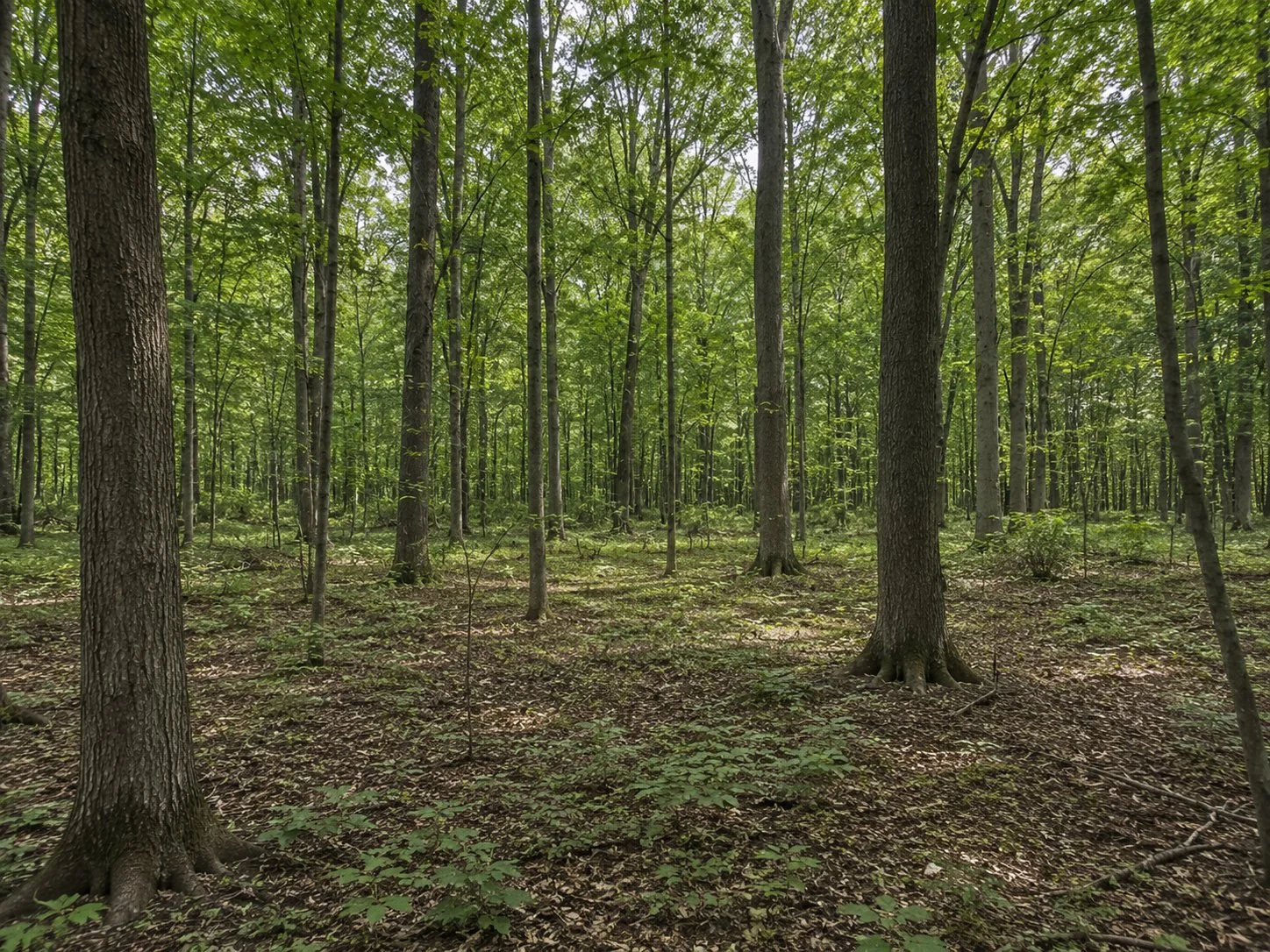
Yes, over time. Native seed banks in Ohio soil are often still viable even after decades of invasive dominance. Once the invasive canopy is removed and light reaches the forest floor, native spring wildflowers often reappear within a season or two. Actively seeding with native species accelerates the process.
How many seasons does it take to control honeysuckle?
With a combined mulching and herbicide follow-up program, most properties see substantial control within two to three growing seasons. The first year clears the main infestation. The second year treats resprouts while they're small. By year three, the population is typically reduced to manageable levels and native vegetation is re-establishing.